Friday, August 31, 2012

[獨立] [當今讀者來函] 真的結束了嗎?

真的要结束了吗? 

作者/邓婉晴 2012年08月30日 12:26:28 pm

【邓婉晴】要结束了吗?

七年前开始念媒体研究系,在见识及理解到传统媒体因垄断偏颇而失去的平衡深度报导后,《当今大马》及《独立新闻在线》就一直是吮吸新闻与评论观点,甚至是揣摸与学习新闻该如何报导,人物该如何深入访问的管道。

回想起自己对《当今》与《独立》新闻的阅读模式,《当今》是要追踪即时新闻时登录的第一个地方。其利落的页面与文风,犀利果敢的红字,滚动报道的方式总是让人能很快地得到所要的资讯。

至于《独立》,则是要了解一个议题,做研究报告的好帮手。《独立》很细心,蓝色的页面很温和,而且经常在连续性的报道末端附上其他新闻的连接,让半路跟进的读者能更了解事情的来龙去脉。《文库》做的新闻整合,像一部部现代通史,戏的起承转合,一目了然。

必须提的是,《独立》的另一珍贵资产,是后来增设的《独立文艺志》。虽然曲高和寡,其中一些篇章也有来自香港的味道,但在马来西亚这片文化沙漠,这些连结文化、戏曲、艺术与学术的文章,对有兴趣的人读来是一大享受。比起《当今》的及时雨之用,《独立》于我有更多元及文化灌溉的意义。闲来无事随手看一两篇错过 的《文化志》及《专栏》,早已成为习惯。

城市精神是什么?

真的要结束了吗?

网络及脸书的普及,常让我们理所当然地觉得免费的资讯是一种理所当然。殊不知即便是脸书广传的所谓恶搞及即时新闻,背后也是有很多人,花了很多时间在整理与 书写,上传与回应。文字是一种创作,不管以任何形式出现,他都值得让人以基本的尊重和礼貌对待。所谓礼貌,即如转载说明出处,不断章取义等。然而今天看到 的局面,是大部分的人冀望从网路得到更劲爆的资讯,却不太想也很少意识到,这些耕地也需要有心人一起去灌溉,去付出。

走过世界多座城市,常常在想,这座孕育自己的城市,精神到底是什么?有没有一个核心价值,是足以让绝大部分的人,群起不惜一切代价去捍卫去守护的?我们希望 能有个干净的街道,却默许身边前后的人在眼前把烟蒂纸袋丢在街上。我们知道电动火车的女性车厢规定只供女性,却有很少人会主动去提醒或无知或装傻的男性乘 客,这里不适合他们。

多年的教育只教会我们在一堆堆钢骨水泥中关心自己,保护自己,不读世界历史,缺乏国际常识,对周遭发生的事不痛不痒、不闻不问。纵然有时会心疼会愤怒,但也只限于一瞬间。叹息之后,生活依旧,好象少了些什么,却也没什么,什么也没有。

于是在马来亚联邦独立55年后的831,有一条老街,一个老社区因发展而面目全非,一家百年茶馆即将结束营业,一盏独立新闻之火熄灭。还有一些坟山被毁,一 些村庄将被毒害。在《独立》读着玉壶轩茶楼的故事,不胜唏嘘,欲说还休。除了悲情,我们还能做什么?55年,我们到底发展了什么?

从没让读者失望

末了,想要借此机会感谢前总庄老师在2008年曾主动联络要我帮忙当《独立》的特约记者。还记得第一次去马华公会采访叶炳汉记者会,就连他的长相也不大清 楚,就胆粗粗大喇喇地写了一篇新闻,还被赞美一番。之后在出国深造前在《独立》当了一个星期的全职记者,庄老师第一天就指示我一个人去采访国会新闻。因为 工作量与压力实在太可怕,也让我从此对全职当记者的理想幻灭(哈哈)。

也因为有总编的胆识与魄力,在独立留下的,都是铁铮铮为了一个强大的理想,甘心把生活都奉献给工作的人。为此我向你们致以最高的敬意。记得在《当今》看过一 篇新闻,是前一晚半夜四点多上载的,在电子媒体必须持有的即时性与高效率,剖析新闻的深度与广度上,你们从来没有让读者失望。

也多亏有《独立》与《当今》这两家电子媒体,让从中学投稿平面媒体就一直不获刊登的我,终于有一个能容纳异见的平台,让那些无法被平面媒体接纳的想法见光,甚至引起共鸣。这些无形的鼓励与支持,对一个嗜字的人来说,重于泰山。

我也相信,《独立》与《当今》还有其他异议媒体,在马来西亚所做过的一切努力,那些独立又坚毅的声音,会一直缭绕在人们的心中,慢慢扩散。在这个人文道义廉价的时代,你们种下的文字与精神,有一天,会遍地开花的。

我是如此相信着。祝福《独立》团队的每一员,祝福深深。


--------------------------------------------------

草稿于8月初得知獨立即將于月底熄燈之後。之後忙於工作,流浪澳洲10天,回來后29/30日在3小時内完稿。

原稿題目:寄語《獨立》

http://www.merdekareview.com/news_v2.php?n=26509  (38 likes, 12 comments updated 20121007)

http://www.malaysiakini.com/letters/207532   (35 likes 1 tweet 1 comment updated 20121007)


Read more!

Friday, August 10, 2012

[The Rocket] The Sweet Rebel: Remembering Fan Yew Teng

The Sweet Rebel: Remembering Fan Yew Teng
By Tung Wan Qing


Before writing this article, I did not know Mr Fan in person or any of his works. I was not even born when he was charged under the infamous Sedition Act. His crime? He published a speech in the second issue of The Rocket in 1975 by the then-Penang DAP chairman, Dr Ooi Kee Saik, in which Dr Ooi welcomed Lim Kit Siang’s release from ISA.
But here I am, sitting in a room beside the DAP headquarters, writing an article for The Rocket in 2012, reading books and tributes about Fan’s life, his ideas, and his stories.
What makes a hero a hero? What makes a warrior a warrior? In films, we might be fascinated by Thor who can use his extraordinary power to protect the world, or Spiderman who has endless strength. But in reality, a hero in one’s heart is always a humble and simple man.
Heroes are often hopelessly idealistic, regardless of how many times have their ideas been demonized and flung aside. They are morally principled enough to strive their whole lives to uphold it, even at the cost of personal loss and sacrifice.
A few descriptions reoccur in “The Sweet Rebel: Remembering Fan Yew Teng”, a book edited by his twin daughter Pauline and Lilianne Fan, to commemorate the first anniversary of his passing. Fan was repeatedly described as the “Beacon of Light”, grassroot leader, principled, intellectual, daring, fearless, truly a simple man with a big heart.

Fan Yew Teng was a two-term Member of Parliament in Kampar and Menglembu, as well as Selangor assemblyman for Petaling Jaya. He was the editor of “The Educator”, the official organ of the National Union of Teachers (NUT), and later editor of The Rocket. He was also the co-organizer of the 1967 nationwide teachers' strike which demanded equal pay for female teachers, better housing and medical benefits, and pension after retirement for all teachers.
When Lim Kit Siang was detained under the Internal Security Act in 1969, Fan served as acting DAP Secretary-General, exercising the powers even before Lim, to keep the party from falling apart in the post-May 13 climate.
Fan later left DAP over differences in principle, yet he never turned his back on any injustice happening in Malaysia. He participated in a 1998 international forum against Lim Guan Eng’s unjust imprisonment.
When it came to race, Fan was truly “color blind”. He was amongst the first people to connect PAS to the Chinese community since the early eighties. He was also a well-known columnist in Harakah and Aliran.
Internationally, he founded Suaram and was concerned with many international issues, including the release of Aung San Suu Kyi. For him, human rights and the dignity of humanity cut across race and religion.
According to Petaling Jaya City Councillor Richard Yeoh, Fan’s victory over then Education Minister Dr. Mahathir in the Great Economic Debate at University Malaya in 1974, was probably the cause for Dr. Mahathir to withdraw universities’ autonomy with the amended University and University College Act (still in effect today).
Despite his huge achievements and contributions, one of the deepest impressions that Mr. Fan left to his beloved friends from all over the world, was his fondness for his typewriter, pipe and bicycle.
How could such a simple family man become a political target, be charged for an article he published in The Rocket, removed as the Member of Parliament and denied his parliamentary pension? I believe this was simply because Fan was true to himself.
Fan’s legacy was his big heart and his deep compassion to social justice. One does not have to know him in person to feel his passion and his ideas for a better Malaysia and a better world. This is what connected him and other giants like Lim Kit Siang, who have been and are still working selflessly for this cause.
Reading “The Sweet Rebel” made me feel how many lives that Fan impacted. I remembered Lim Kit Siang’s expression when he was sitting at the front row at the book launch of The Sweet Rebel: Remembering Fan Yew Teng. He was ever so calm and composed.
Lim looked at Fan’s face projected on the main screen backdrop, and he flipped through a copy of the book displayed on the table. He listened attentively when Pauline Fan and Ambiga gave their speeches; in the middle of the tribute he took out his glasses and wiped his eyes. In those 5 seconds as the camera focused on him, Lim raised his head up again as resolute as ever, with his glasses perched on his nose. That was the face of a man who lost a comrade and friend.
Fan may have felt that he had not done enough to make the world a better place. Even lying on the hospital bed, his concern was how to help others escape from suffering. Malaysia would not have come this far without the efforts and contributions by Fan and other first generation Malaysian rebels.
What makes a rebel a rebel? A strong, fearless, and principled soul. A great mind, great heart, great vision. As much as we mourn for his soul, Fan’s wishes for a better Malaysia are still valid today: “For how long more are Malaysians to live with fear and loathing? Afraid about the collapse of public safety even in broad daylight and disgusted by rising inflation and galloping corruption. How much longer? Surely it is in the hands of the Malaysian people themselves.” (in Harakah, December 2007).
I think that the best and only way to remember Fan Yew Teng, is to continue his mission to fulfil his dreams and ensure that the spirit of a Malaysian Malaysia lives on. 

This article was published at The Rocket, August 2012

Genta Media's official website - Editorial Diary 03/03 
Read more!

Thursday, June 28, 2012

[当今特约] 浅谈大马龙舟赛


浅谈大马龙舟赛


读者特约
2012年6月28日  下午1点55分

文:邓婉晴

上周六是一年一度的端午节,虽然自小接触的历史传说都说是为了纪念中国2500多年前,因在朝政郁郁不得志,遭人陷害被发配边疆,最后投江自尽的爱国诗人屈原,但也有说是纪念伍子胥。无论是伍还是屈,端午节最盛行的活动一般有三:吃粽子,喝雄黄酒,以及赛龙舟。

说到赛龙舟,许多人大概还对两年前在槟城发生的翻船惨案记忆犹新,或许也让许多人对水上活动忘而却步。上网查询,原来马六甲在上周举办了国际龙舟锦标赛,吸引43支国内外队伍参加,创下该活动28年来最多队伍参赛的记录。

然而主办单位却同时因参与华裔稀少,年轻人兴致缺缺,而对赛龙舟这项传统中华文化的前景感到忧心。


瑞典五朔节的划船赛

龙舟赛也让我想起在遥远的北欧瑞典,为庆祝春天到来的五朔节(Valborg)。每年的4月30日,节庆中最早举行也最热闹的,就是划船赛。

与龙舟赛不同的是,Valborg的船只娇小,而且全程由参与者自己组队、设计及制造。由于船只材料并不坚固,船赛最大的乐趣就是看谁的假船能通过激流的考验。也因为船只由自己制造,通常在一个月前,人们已经为筹备比赛而兴奋不已。

Valborg虽然在北欧许多城市都有个别举办大型活动,但属瑞典最古老的乌普萨拉(Uppsala)最热闹,短短一天的节庆,每年都吸引了约10万来自国内外的人涌入这座平日安静的小城共襄盛举,人山人海,巴士爆满,火车票售罄。

除 了早上赛船,中午进行传统的挥帽仪式,傍晚围着篝火狂舞,一整天还有大规模的户外野餐,有表演,有沿街叫卖的小吃,也是唯一一天能够在光天化日的大街上喝 酒,是全国同欢共庆的嘉年华。虽然之后依然会下雪,但在常年寒冷的国度,日照时间变长,能看见并沐浴在阳光下是最令人兴奋的人间美事。


北欧与大马船赛对比

会 扯到瑞典,除了因为那是自己一个非常愉快美好的回忆,北欧对节庆、文化与传统的联结,也常常让我有一些领悟与想象。虽然两种船赛在形式上和意义上都有不 同,却同样有着悠久的历史与文化意义。对比后者声势之浩大,想对我国的龙舟赛,甚而其他的节庆活动,放在马来西亚的脉络,以观者的角度提出一些浅见。

一个活动或节庆没办法得到关注,受到热衷,成因颇多,我认为主要有二:

(一)    宣传不足,知名度不高,对象模糊


除了马六甲,上网查询,才得知原来槟城与沙巴也有龙舟赛事。第廿七届沙巴龙舟赛的活动咨询登在旅游网,由旅游局、斯里沙巴旅游公司、沙巴华人文化协会承办,但却没将活动置于网站的显眼处,以致乏人问津。

槟城龙舟赛已经成为国际盛事,即将在这个周末举行。但除了槟州人,有多少人知道,甚至会特地到槟州观赏船赛?上网查询,没有一家媒体对端午或龙舟赛着墨专访,原因何在?

所 有活动都需要宣传,在如今许多佳节都有商家代表打广告热炒的马来西亚,为何独剩端午?媒体是否有扮演文化传播的角色,借着端午节的报道,来倡导与推广我国 的龙舟赛事?龙舟赛事当天,有没有电视台愿意到现场报道?端午节在许多节庆中不被重视,是否因为不符经济效应?若答案为是,那要如何提升其市场价值?

除了广告,锁定对象群也很重要。以瑞典的Valborg为例,这种需要动员的活动,青少年尤其热衷,理应成为宣传的主要对象群。大学生也许不比商家有财力资 助,但胜在动员能力强,若能与中学或大学合作,在院内结社,寻找赞助,举办宣传活动,锁定消费群及参与者,就更能将消息发布得更广,成本既低效率又高。

此次的马六甲龙舟赛虽然成功吸引大专生参与,但相信还有很多人,包括笔者在内,是在赛事结束后看报道才得知。宣传只限有份参与的俱乐部或团体,广大的潜在参与者及观众却浑然不知。赛事在脸书等新兴媒体,完全没有消息。

(二)    文化意义与市场经济脱节

端午节如今对我们的意义,只限于在家吃粽子而已。在脸书也只看到朋友在祝贺彼此端午节快乐,也仅仅是祝贺而已。

以中秋为例,至今还有一些会馆甚至报馆会举办月光晚会,猜灯谜也不算是一个陌生的游戏。流行文化方面,电台每逢佳节播放所有跟月亮有关的歌,还会少吗?但试 问有谁会哼一首端午节的歌?若非听到张吉安在上周的《乡音考古》节目中播出多首与赛龙舟有关的歌曲,还不晓得有那么有意境的歌曲曾经在中国广为流传。某电 台在脸书专页让网友点歌,没有一首与节日有关。

歌曲是最能通过反复传唱,记载历史乡情的艺术文化,来到2千5百年后的马来西亚,已经完全断层,就也难怪端午节对人们的吸引力大减了。


要让端午龙舟赛更广为人知,在此提出两项建议:

(一)    将节日商品化,并注入更多文化符号意义

文 化商品化是一个既符合经济效应,又能有资金传承历史文化的方法。综观全球,小至日本的艺妓与卡通龙猫,丹麦的美人鱼,大至瑞典的整个设计工业,都是利用商 品来成就并沿续文化,在变成商标之后,仍不失其传统/童话/历史意义的成功例子。虽然我们并非龙舟赛的创造者,但若有心传承,不但可保存此文化,甚至还能 借着将其发扬光大,吸引外州及外国游客共襄盛举,进而带动举办地的旅游业。到了这个阶段,自然会有商家投资赞助。

让利伯维尔场[自由市场]的无形之手撑起整个文化工业,是大势所趋,也是最长久的道路。我国的元宵抛柑活动,也是一年比一年办得更热闹及盛大。再加上粽子实际上已经成为常年常卖的端午遗产,我们是否能做更多有意义的活动?

(二)    将游戏规则简化,本土化

旧 游戏若因传统二字而坚持照办,除了缺乏创意也恐怕会不符现实。若龙舟太庞大,建造一艘船需要的成本太高,可否将船只缩短,减少每只船的人数?若在户外比赛 有涨潮的危险,可否有更好的季节或时间?若老船让女性划得太吃力,可否在新的船只设计上更方便女性?立定新条规,加入新元素,企图让游戏变得更简单易懂, 将会让活动更有吸引力。从网站得知,槟城龙舟赛今年增设摄影比赛,并将活动信息置于首页首项,就是一个能吸引人观赛的好例子。

吸引力确是 一大要素,要如何让年轻一代甘愿把屁股从椅子及计算机[电脑]荧幕前移开,走到户外,在炎热,公共交通与环境又不友善的马来西亚,的确实是一大学问。我国人民并非 不爱运动,从登山、潜水、脚车到马拉松等户外活动,都常年吸引多人参与。因此若将赛龙舟塑造成一种有趣的、安全性高、自主性高的水上活动,相信将会吸引更 多人参与。

末了,忘记屈原可以是一种个人崇拜时代的褪色;忘了传统与文化意义却是永劫不复的失真。感谢依然有人坚持主办龙舟赛,但愿此文化能经由更强的市场包装,更丰富的文化符号及更简化的游戏规则,能够吸引更多参赛与观赛者,让龙舟文化能源远流长。

----------------------

题外话:
当年的白素贞因为在端午节喝下了熊黄酒而原形毕露,虽实不该欺骗许仙,但其一片痴情与人妖不得结合的教条却也惹人怜惜。

想起如今的政坛充斥着堕落与背叛,欺瞒与谎言,如果世界上真有能让人现出原形的酒,倒是想让诸位高官尝尝,看看谁是真伪善,谁又是假诚恳。让丑陋的真身裸露于天下,唯有仰不愧于天,俯不怍于人的代议士能留下。


http://www.malaysiakini.com/columns/202149 (9 likes updated 20121007)


Read more!

[The Rocket] In a State of Reform

In a State of Reform 

 27 June, 2012

by Tung Wan Qing

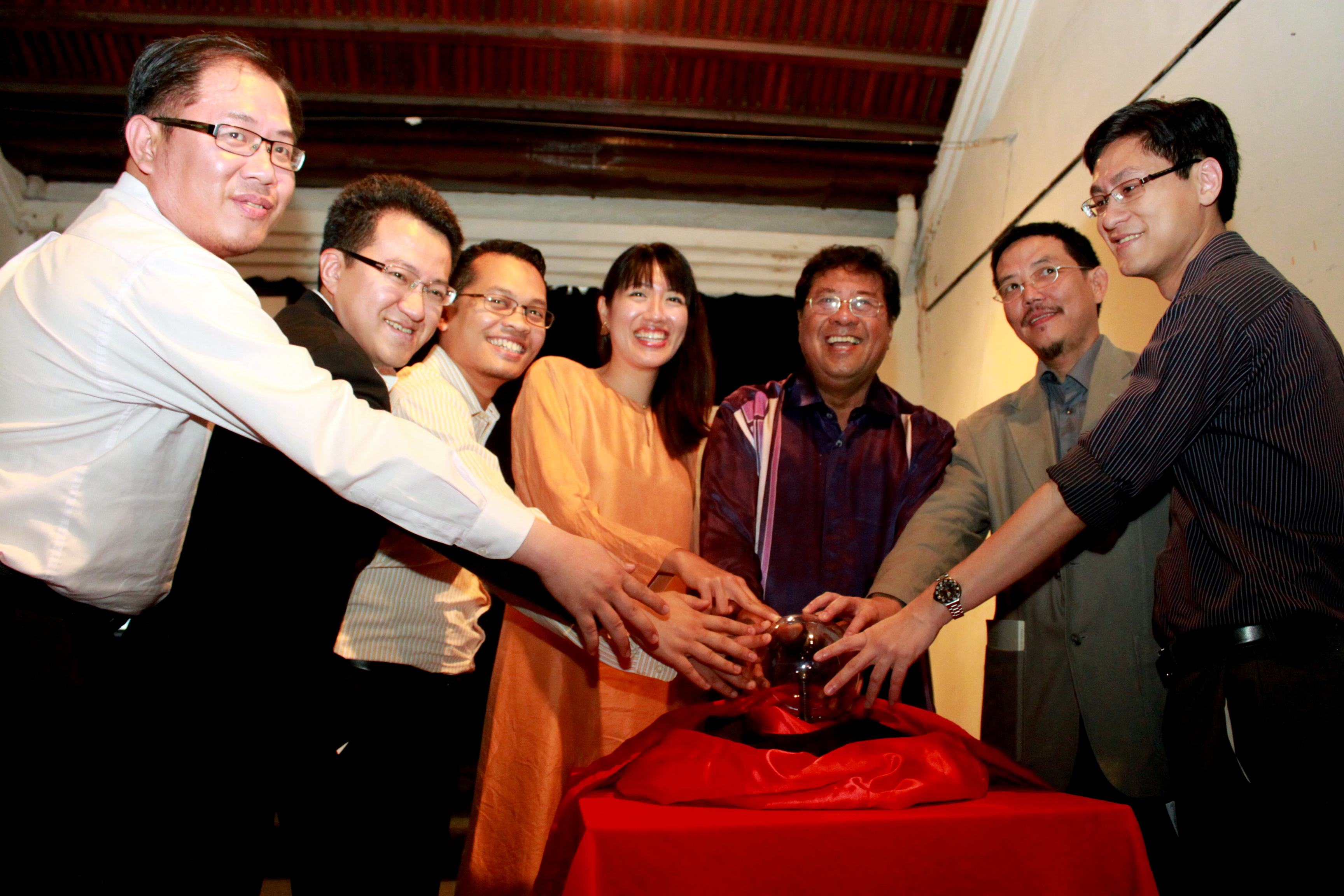
Selangor Menteri Besar Tan Sri Khalid Ibrahim and other VIPs at the book launch

People used to “worship” authority. In those days, there was only one post office in town and people had to walk miles to get connected with the outside world. Concentration of power was the main political strategy at that time.

The 21st century, however, is all about efficiency, integration and collaboration. Decentralization is a process of distributing the decision-making powers to the lower levels of the organization. In the business context, it is like a niche approach focusing on different cities and communities with different needs.

One of the most prominent tactics in practising decentralization of power is through local elections, where local representatives are elected by the local citizens instead of being appointed by the federal government. A bottom-up system that includes public participation and evaluation would therefore enhance trust and accountability in the state-local relationships, hence strengthening the democratization process.

In fact, decentralization is not a new concept in Malaysian politics. According to Tricia Yeoh in her new book “States of Reform: Governing Selangor and Penang”, Malaysia had a healthy practise of local government elections when it was a British colony in the 1850s, only to suspend it in 1965 due to alleged political tension with Indonesia.

Since then, the federal government has consciously rejected the necessity to revive local elections even though official requests have been made by the Selangor and Penang state government.

The reason behind this is obvious. As much as decentralization will undoubtedly weaken the power of the central authority, it brings advantages that will benefit the rakyat and the nation as a whole entity.
Firstly, as the people are exposed to different forms of governance in different states, they could evaluate from the outcomes and place higher expectations to their local governments.

Public pressure and the bottom-up evaluation system would ensure a healthy competitive environment between the states and local governments. When each state works hard to improve their own territory, it will speed up the whole democratization process and lead to a better standard of living for the whole country.

Secondly, it is very reasonable and practical to have state and local governments tackle local issues like traffic congestion or crime instead of practising a single universal policy imposed by the federal government regardless of different internal factors in different states.

By empowering the state and local councils to solve local problems, the federal government could focus on bigger issues, and hence reduce the chances of wasting human resources and doing double work. The state and local governments which have more proximity with the grassroots could also invite local intellectuals and NGO representatives to participate in policy-making. It would be a win-win outcome.
While resulting in higher productivity, accountability, and efficiency in tackling local issues by the local government, decentralization tends to speed up urban development with the federal government investing most of its resources in the capital.

Penang would never have been revived as a cosmopolitan city if there wasn’t a totally new state government to implement a whole new set of ideas and plans despite facing huge obstacles when dealing with the federal government.

We would never know which city could stand out next, if there is no room for the local authority to exercise their powers altogether with the community. The locals know the city best, they know which matter troubles them the most and what can be done to effectively solve it, so let them do it. Simple as that.

In so far as it might look like an ideal concept, there are some “terms and conditions” for this concept to run. The challenges and limitations of decentralization were discussed by panelists at a forum cum book launch at Annexe Gallery on 8th June.

MP for Bukit Bendera, Liew Chin Tong emphasised that decentralisation can only operate succesfully when accompanied by democratisation. State and local governments have to be free from any harm, fear, corruption and interference in the process of policy implementation.

In addition, the mass media has to be fair and square in reporting the news, while civil society and intellectuals have to be included in the decision-making process. Only when all parties function well and independently can decentralization succeed.

There is a risk of facing denial of service from the “upper level” or civil servants from different parties working under the same department. Non-cooperation will result in delay or rejection of a good plan.

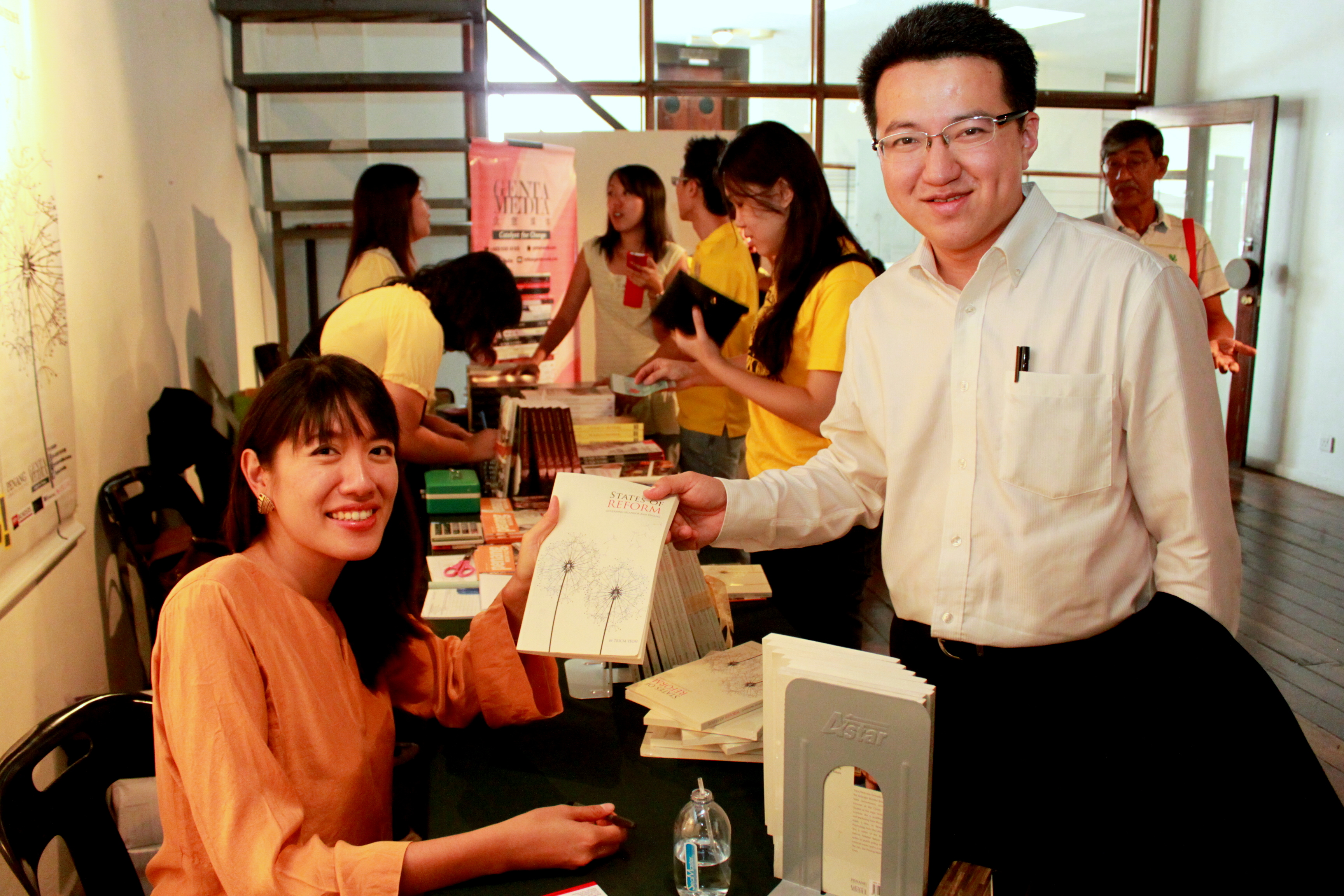
The author with MP for Bukit Bendera, Liew Chin Tong at the book launch

The federal government refused to allow Petaling Jaya City Council (MPPJ) to set up an Auxiliary Force in Petaling Jaya to tackle the high crime rate. This goes to show that even the best laid plans would be stuck when there is a disconnect and conflict in federal-state-local relations. Eventually, the rakyat will always be the ones who suffer.

Nonetheless, having decentralization of power is not merely an ideal concept to be discussed in Malaysia. Our country is now marching towards a much more mature level. There are more free and independent alternative media which serve as watchdogs. We have a 50-50 chance and say in the parliament.

Penang and Selangor are two states that have improved so much since the last election by having the autonomy to experience different forms of governance and practices. Most importantly, today the rakyat have become more mature to dare to dream big and make things happen.

Locals have the advantage as compared to some of the civil servants working in federal government departments who do not even know the sentiment on the gound. It is the now the right time to start promoting decentralization, by urging the federal government to return the power to the states and local government, to ensure a more competitive, fair and transparent political culture in Malaysia.

Penang has taken the first step by passing the bill to revive local election last week, the road to decentralization is just around the corner if we are looking at the same direction. -The Rocket


Title: States of Reform – Governing Selangor and Penang
Author: Tricia Yeoh
Price: RM28
Free PDF excerpt here


http://www.therocket.com.my/en/in-a-state-of-reform/


Read more!